

Description
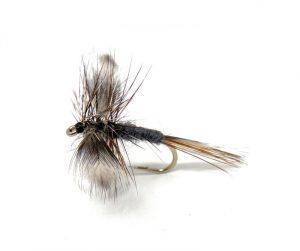
Adams Spent Wing
Anglers use the Adams fly as a classic dry fly in fly fishing, acknowledging its versatility and effectiveness. They use it to imitate a variety of insects, often taken for mayflies or even small caddisflies. Fly tyers tie the “Adams Spent Wing” fly version to mimic a mayfly that has already laid its eggs and is dying or dead on the water’s surface.
It is named after its creator, Len Halladay, who named it after his friend Charles F. Adams. It is a dry fly, designed to float on the surface of the water and imitate a mayfly that has died or is dying, drifting downstream.
It’s a bit more challenging to fish. This is because it represents a stage of the insect that is less frequently imitated by anglers. The spent-wing version typically sits lower on the water, imitating the natural insect in its dying state.
The Adams Spent Wing fly usually has a more horizontal profile on the water. Its representation includes spent wings, which anglers achieve using upright hackle fibers or CDC (cul-de-canard) feathers that lay flat. Anglers often fish it in slower currents or eddies where spent insects might collect.
Because it imitates a vulnerable stage of the insect’s life cycle, trout and other fish species can find it particularly enticing.
How fished
When fishing the Adams Spent Wing or any dry fly, presentation is key. Pay attention to drag-free drifts and delicate presentations to mimic the natural behavior of the spent insect. The fly can be a rewarding one to use, especially when trout are selectively feeding on these types of insects.
Anglers commonly favor this fly and frequently use it in trout fishing. It deserves a spot in every anglers fly box.
Usually available in hook sizes: 12 | 14 | 16 | 18
Click here to find more dry flies.


Reviews
There are no reviews yet.